

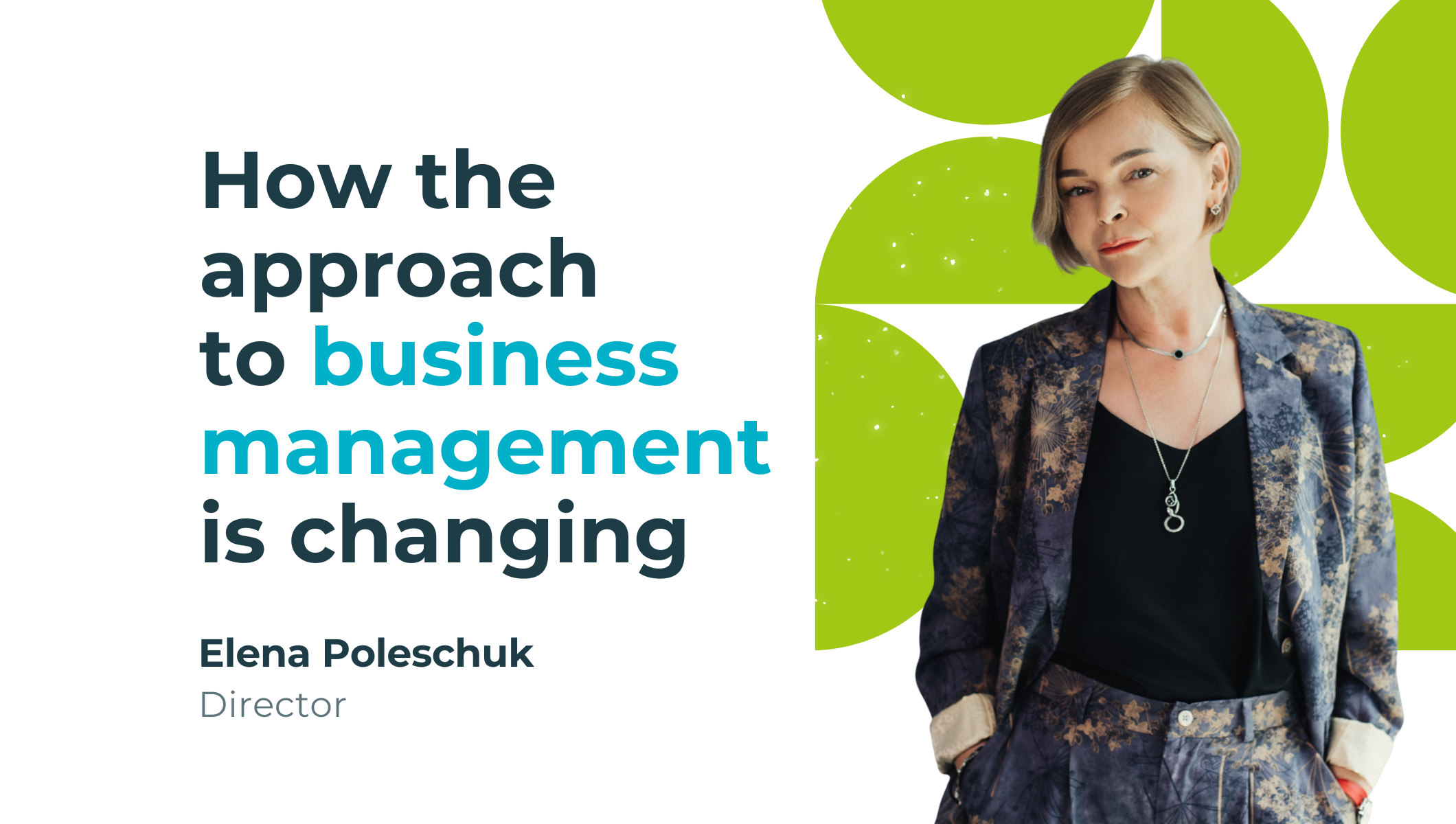
"Modern leaders increasingly act less as heroes who make every decision themselves — their role is changing. Instead of being the chief expert on every issue, they create the conditions in which strong specialists make the right decisions independently.
Such leaders do not seek to be the center of attention. They build processes, develop a culture of trust, delegate responsibility, and create organizations capable of growing independently of the personality of the top leader. For fast-growing companies, this approach becomes a competitive advantage."
Such leaders do not seek to be the center of attention. They build processes, develop a culture of trust, delegate responsibility, and create organizations capable of growing independently of the personality of the top leader. For fast-growing companies, this approach becomes a competitive advantage."

Elena Poleschuk
Director, LavoroSolutions
"Many companies have already implemented modern project management tools, using Scrum, Kanban, and digital platforms. However, the main challenge arises when new tools are combined with old management models, where all key decisions are concentrated in one person.
As the business grows, such a system begins to slow down development. That is why today more and more companies are moving to a model of distributed leadership, where the leader sets the strategy and professional teams gain greater autonomy in implementing projects."
As the business grows, such a system begins to slow down development. That is why today more and more companies are moving to a model of distributed leadership, where the leader sets the strategy and professional teams gain greater autonomy in implementing projects."
Elena Poleschuk
Director, LavoroSolutions


